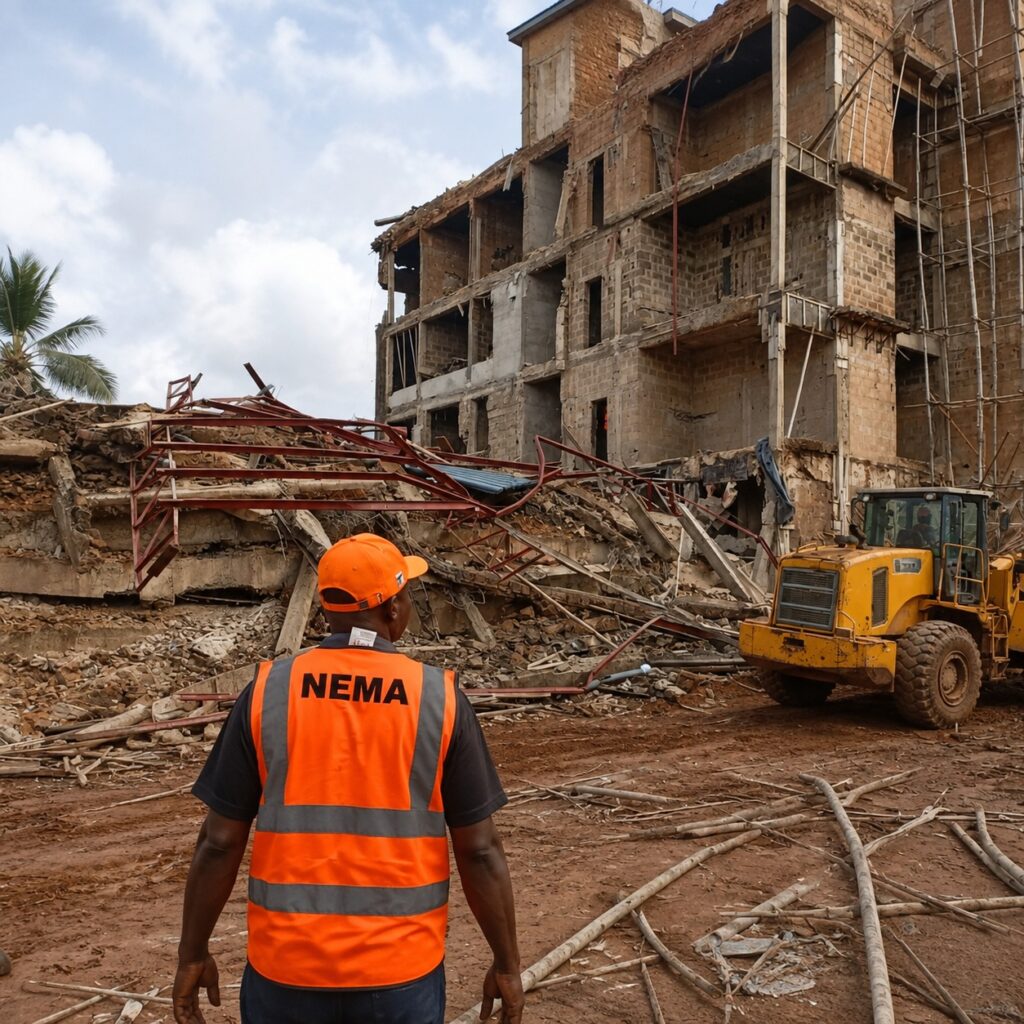
Enugu Building Collapse 2026: A Call for Stronger Regulations
Enugu Building Collapse 2026: A Call for Stronger Regulations Another building collapse in Nigeria has brought the country’s construction safety standards back into the spotlight. On 13 September 2026, a four-storey building under construction in Independence Layout, Enugu, collapsed. Reports indicate workers were on site when the structure collapsed in the morning. Four people were rescued, while one body was recovered, according to Channels Television. Rescue and emergency agencies, including NEMA, the Red Cross, SEMA, the Enugu State Capital Territory Development Authority and the police, were involved in the response. The precise cause of the collapse has not yet been established publicly, and investigations are underway. But the incident raises a much bigger question: Why do building failures continue to occur when Nigeria already has building standards, professional requirements and regulatory approval processes? The Real Problem Is Bigger Than One Collapsed Building It would be premature to assign responsibility for the Enugu collapse before the investigation is completed. However, the incident comes against a broader background of concerns about construction practices in Nigeria. Earlier in March 2026, the Nigerian Institute of Building (NIOB) warned about the increasing number of building collapses and linked many investigated cases to factors including poor construction management, substandard materials, inadequate professional supervision and the involvement of unqualified personnel. This means the conversation should not end when the rubble is cleared. The industry needs to examine how buildings are designed, approved, constructed, supervised and inspected. Four Areas That Demand Greater Attention 1. Building Approval Must Mean More Than Paperwork Obtaining approval for a building plan is an important part of construction, but approval should not be treated as the end of regulatory responsibility. A building needs to remain compliant throughout construction. Research examining building regulation in Enugu found weaknesses in local planning authorities’ ability to properly scrutinize drawings and monitor compliance during construction. The study identified inadequate staffing, insufficient professional involvement and weak enforcement as important issues. The lesson is straightforward: Approval alone is not enough. 2. Professional Supervision Cannot Be Optional Construction is a coordinated technical process. Architects, structural engineers, builders, quantity surveyors, geotechnical professionals and other relevant specialists each have important roles to play. The involvement of qualified professionals helps ensure that: Structural designs are properly developed. Materials meet specified standards. Construction follows approved drawings. Foundation decisions reflect site conditions. Structural elements are properly executed. Problems are identified before they become failures. Cutting professional supervision may reduce costs in the short term, but getting construction wrong can have catastrophic consequences. 3. Material Quality Matters A building is only as reliable as the materials and workmanship used to construct it. Cement, reinforcement steel, concrete aggregates, blocks and other materials must meet appropriate specifications and be used correctly. A 2026 study examining building collapse cases in Nigeria identified substandard construction materials as the largest reported category among the causes examined, followed by failures in geotechnical investigation and poor or non-professional design. The study also identified inadequate supervision, poor workmanship and non-compliance with building regulations among contributing factors. This reinforces an important principle: Construction quality should never be sacrificed for short-term savings. 4. Enforcement Must Happen Before Disaster Perhaps the most important question is not simply: “Who is responsible after a building collapses?” It should be: “What could have been detected before the collapse?” Effective enforcement should identify unsafe construction while a project is still in progress. That means regulatory authorities need adequate technical personnel, effective inspection systems and the willingness to stop work where serious violations are discovered. Research on Enugu’s planning authorities has previously found gaps in site monitoring and enforcement of building regulations. Building Safety Starts Before the Foundation Preventing building collapse requires a process that begins long before pouring concrete. Before Construction A responsible project should involve: Proper architectural and structural design Appropriate soil/geotechnical investigation Relevant statutory approvals Qualified professionals Proper construction specifications Realistic project planning During Construction There should be: Professional supervision Quality material control Compliance with approved drawings Proper reinforcement detailing Correct concrete practices Regular inspections Proper documentation of construction activities Before Occupancy The completed structure should undergo the necessary inspections, tests and certifications required by the relevant authorities and professionals. The Cost of Cutting Corners Construction shortcuts can appear financially attractive. Using cheaper materials, reducing professional supervision, or ignoring required procedures may initially reduce project expenditure. But the cost of failure can be enormous. A building collapse can result in: Loss of life → Property destruction → Financial loss → Legal consequences → Displacement → Loss of public confidence No construction saving is worth that price. What the Enugu Collapse Should Teach Us The 2026 Enugu incident should not become another headline that disappears after the rescue operation ends. It should become an opportunity to ask difficult but necessary questions about Nigeria’s construction industry. Are approved building plans being followed? Are qualified professionals genuinely supervising construction? Are materials being tested and properly specified? Are site inspections frequent and effective? Are unsafe projects being stopped before they become disasters? And when violations occur, are sanctions strong enough to discourage repetition? These questions require answers from developers, contractors, professionals, and regulatory authorities alike. A Safer Construction Industry Requires Shared Responsibility Government agencies must enforce regulations. Professionals must uphold technical standards. Developers must fund projects properly and engage qualified experts. Contractors must execute work according to approved specifications. Property owners have a responsibility to avoid compromising safety to save money. Building safety is therefore not the responsibility of one person or institution. It is a shared responsibility. Conclusion The Enugu building collapse of September 2026 is a painful reminder that construction safety cannot be treated casually. While investigations will determine the specific circumstances of this collapse, the broader industry must keep addressing the issues repeatedly linked to building failures in Nigeria: poor materials, inadequate supervision, weak compliance, poor workmanship, and ineffective enforcement. Nigeria does not lack building regulations. The greater challenge is ensuring that those standards are consistently followed, monitored and enforced. Every building project represents more than concrete, steel and blocks. It represents people’s lives, investments and
Enugu Building Collapse 2026: A Call for Stronger Regulations Read More »