What ₦15 Million Actually Buys You in Nigerian Construction Today: A Full Cost Breakdown
One of the biggest challenges facing private property developers in Nigeria is uncertainty around construction costs. A project may begin with a seemingly manageable budget, only for expenses to increase as construction progresses. Unexpected increases in material prices, changes in specifications, additional labor requirements, poor initial planning, and unclear contractor quotations can all place pressure on a project’s finances. This is why understanding how a construction budget is allocated before work begins is essential.
For illustration, consider a ₦15 million residential construction budget. While the exact figures will depend on the location, size, design, specification, market conditions, and stage of construction, the budget can be broadly divided into three major areas: building materials, skilled labor, and professional/project management costs. The figures below should therefore be treated as a planning framework rather than a fixed quotation or current market price.
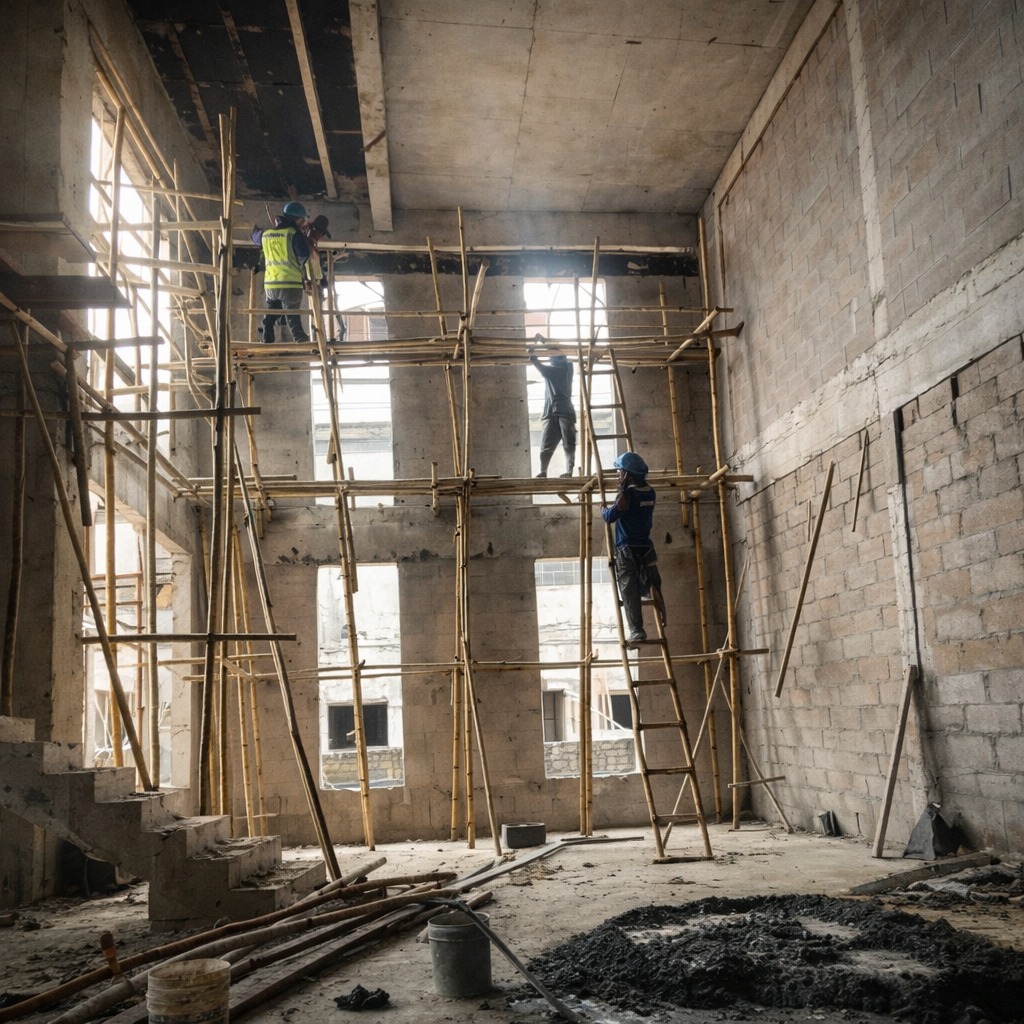
Where Does ₦15 Million Go?
A well-planned residential construction budget generally needs to account for more than cement, blocks, and labor. Professional services, approvals, supervision, transportation, and other project-related expenses can also affect the total cost.
A simplified allocation of the ₦15 million budget could look like this:
1. Building Materials — 55% to 60%
Approximately ₦8.25 million to ₦9 million could be allocated toward core construction materials, depending on the project’s specifications.
This category may include:
- Sandcrete blocks and cement
- Reinforcement steel and other structural materials
- Granite, sharp sand, and other aggregates
- Timber and roofing materials
- Electrical conduits and accessories
- Plumbing pipes and fittings
- Masonry materials
- Other materials required for the relevant stage of construction
Material costs can represent one of the largest portions of a construction budget. Prices may also change during a project, making proper procurement planning particularly important.
The quality and specification of materials should also be clearly established before construction begins. A low-cost material may reduce the immediate expense but could create quality or maintenance problems later.
2. Skilled Labor and Artisans — 25% to 30%
Approximately ₦3.75 million to ₦4.5 million could be allocated toward skilled labor and site operations.
Depending on the project stage, this may cover:
- Masons
- Iron benders
- Carpenters
- Plumbers
- Electricians
- Tilers
- Painters
- Machine operators
- Site clearing teams
- General laborers
Labor costs can vary significantly depending on location, project complexity, skill level, and whether workers are paid daily, weekly, or based on specific tasks.
Using experienced artisans and establishing clear scopes of work can help reduce avoidable rework and improve productivity on site.
3. Professional Services, Approvals and Project Management — 10% to 15%
Approximately ₦1.5 million to ₦2.25 million could be allocated to professional and project-management-related expenses.
Depending on the project, this may include:
- Architectural drawings
- Structural engineering
- Engineering reviews
- Building approvals and permits
- Site supervision
- Quality-control inspections
- Project coordination
- Construction management
- Other professional services
These costs are sometimes overlooked when property owners prepare their initial budgets. However, professional oversight can play an important role in ensuring that construction follows the approved design and required standards.
What Does This Mean for the Property Owner?
A ₦15 million construction budget does not simply mean spending ₦15 million on physical materials.
A significant portion of the budget goes into the people, expertise, planning, supervision, and processes required to turn a design into a completed building.
For example, allocating the entire budget toward materials without accounting for professional services and labor can create a situation where construction begins successfully but later runs out of funding.
Good construction planning therefore starts with understanding the complete project cost, rather than focusing on individual material prices.
Why a Bill of Quantities Matters
One of the most important documents in a properly planned construction project is the Bill of Quantities (BOQ).
A BOQ provides a structured breakdown of the work and materials required for a project. It can help the property owner understand what is being purchased, the quantities involved, and the associated costs.
Before committing substantial funds to construction, property owners should seek a properly prepared cost estimate or BOQ that reflects the actual project design and specifications.
This provides a clearer basis for comparing quotations and identifying significant changes in cost.
Avoiding Mid-Project Financial Surprises
Construction costs can change. Material prices may rise, designs may be modified, site conditions may differ from initial expectations, and clients may decide to upgrade specifications during construction. However, good planning can reduce unnecessary surprises.
A well-structured construction agreement should clearly establish:
- The scope of work
- Materials and specifications
- Payment milestones
- Responsibilities of each party
- Project timelines
- Variation procedures
- Quality expectations
- Supervision arrangements
Milestone-based payments can also help property owners monitor progress before releasing funds for subsequent stages.
Transparency Starts Before Construction
For a construction company, transparency should begin before the first block is laid.
Property owners should understand what their money is paying for, what is included in the quotation, what may constitute an additional cost, and how changes to the project will be handled.
At Petik Limited, the objective is to approach construction with proper planning, structured execution, and clear communication so that clients have a better understanding of their projects from the beginning.
Final Thoughts
A ₦15 million construction budget can provide a useful starting point for understanding how construction expenses are distributed, but it should never be treated as a universal price for building a house in Nigeria.
The actual cost will depend on factors such as location, land conditions, building size, architectural design, material specifications, labor costs, finishing standards, approvals, and prevailing market prices.
The most important lesson is therefore not simply how much ₦15 million can buy. It is the importance of planning every naira before construction begins.
A clear scope of work, realistic budget, properly prepared BOQ, professional supervision, and transparent communication can give property owners greater control over their construction projects and help reduce avoidable financial surprises.
Planning properly today can make the difference between a project that stalls halfway and one that progresses confidently toward completion.
Most Recent Posts
- All Posts
- African Culture
- Architectural Design
- Best Builders
- building with purpose
- Client Stories
- Concrete works Nigeria
- Construction
- construction craftsmanship
- Construction Education
- construction Nigeria
- Eco-friendly construction
- Green building Nigeria
- Heritage Travel
- Hot
- House for Rent
- House for sale
- inclusive building design
- Insider
- Land For Sale
- Marketing Plan
- New Buildings
- News
- Petik Projects
- Project Management
- Property
- Property Investment
- quality construction company Nigeria
- Real Estate
- Real Estate Updates
- Structural Engineering
- Structural steel Nigeria
- Sustainable Building
- Sustainable building Nigeria
- Sustainable Growth & Shortlet ROI
- Test Category
- Trust & Transparency
- Trusted builders Nigeria


Categories
- Architectural Design (12)
- Best Builders (29)
- building with purpose (17)
- Client Stories (1)
- Concrete works Nigeria (14)
- Construction (24)
- construction craftsmanship (9)
- Construction Education (1)
- construction Nigeria (10)
- Eco-friendly construction (2)
- Green building Nigeria (1)
- Hot (4)
- House for Rent (1)
- inclusive building design (1)
- Land For Sale (4)
- New Buildings (4)
- News (2)
- Petik Projects (18)
- Project Management (1)
- Property (4)
- Property Investment (4)
- quality construction company Nigeria (2)
- Real Estate (9)
- Real Estate Updates (7)
- Structural Engineering (1)
- Structural steel Nigeria (3)
- Sustainable Building (1)
- Sustainable building Nigeria (2)
- Sustainable Growth & Shortlet ROI (1)
- Trust & Transparency (1)
- Trusted builders Nigeria (5)
- Uncategorized (3)
Tags
- 30-day build
- A House?
- Acquisition
- Age Friendly Design
- Amarisa Court
- Bill of Quantities
- building code enforcement
- building contract
- building contractor
- building contractor Lagos
- building costs Nigeria
- Building Failures Nigeria
- Building Regulations
- Building Responsibly in Nigeria
- Building Safety
- building safety Nigeria
- building speed
- building stages
- buy
- Buy A House?
- Buy House?
- Buyers
- Civil Works
- client testimonial
- climate-smart buildings
- construction budget
- construction company
- construction experience
- construction in Nigeria
- construction materials
- construction Nigeria
- construction process
- construction project management
- Construction Quality
- Construction standards
- contractor red flags
- CORBON
- cost of building Nigeria
- Damp Proofing
- Dangote IPO
- Diaspora Real Estate
- diaspora real estate Nigeria
- Drainage Systems
- energy-efficient buildings
- Enugu building collapse
- fast construction
- Flood-resilient buildings
- foundation casting
- Foundation First
- Green Construction
- Home
- home developments in Nigeria.
- Home Inspection
- house building guide
- house building Nigeria
- Inclusive Building
- Investing
- Investing In A Real Estate Property
- Investment in Nigeria
- Investment Property
- Lagos
- Multi Unit Development
- Nigeria
- Nigeria Construction
- Nigeria real estate
- Nigerian Investors
- Nigerian Real Estate Investment
- Osogbo Shortlet
- Petik
- Petik Builds
- Petik Limited
- Planning
- Project Management
- property development
- Property Investment Nigeria
- Property Management
- property ROI
- Quality Control
- Real Estate
- real estate development Nigeria
- Real Estate Investing
- Real Estate Investment
- Real Estate Market
- Real Estate Nigeria
- Real Estate Property
- Registered Builders
- Reinforced Concrete
- reliable builders
- Rent
- Should
- Should I Rent
- Should I Rent Or Buy A House?
- Site Mobilization
- stress free building
- Structural Engineering
- Structural Integrity
- Sustainable Architecture
- sustainable construction
- Tips
- Top Real Estate Companies in Lekki
- transparent construction
- transparent pricing
- trusted builder
- Universal Design
- Waterproofing
- Wealth Building