
Osun-Osogbo Festival 2026: A Complete Guide to Nigeria’s Living UNESCO Heritage
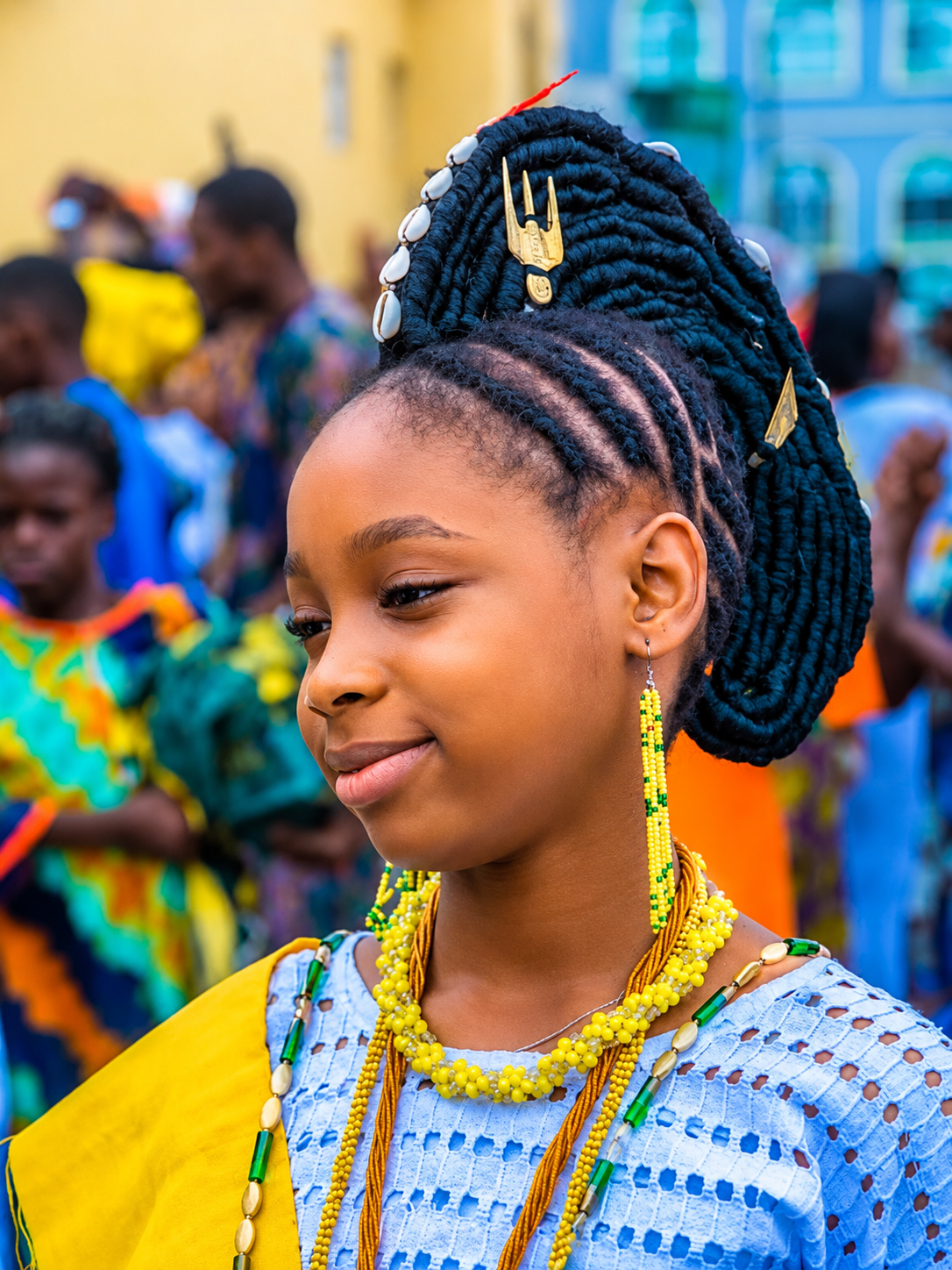
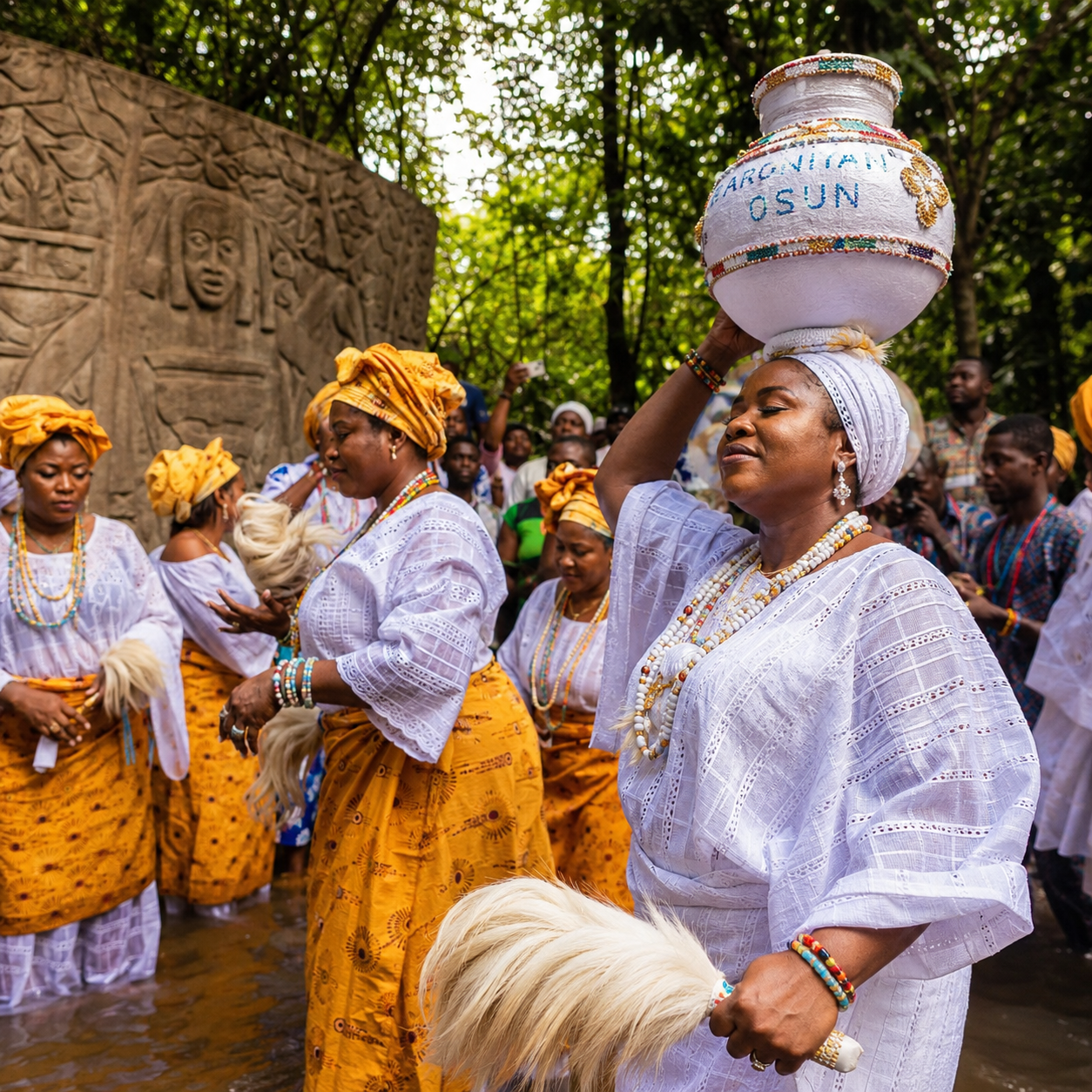
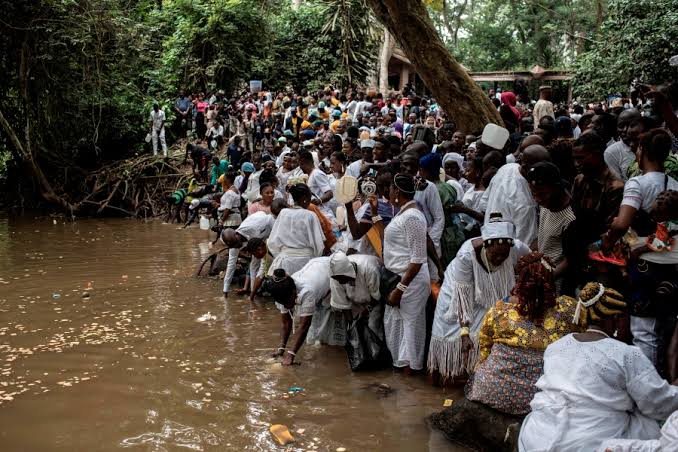
Every August, a quiet forest on the edge of Osogbo, Osun State, becomes the beating heart of Yoruba spirituality. Drums roll through the streets, hundreds of thousands of people converge on a single riverbank, and a young woman balancing a covered calabash on her head becomes, for one afternoon, the most watched person in West Africa.
This is the Osun-Osogbo Festival—and the 2026 edition is shaping up to be one of the biggest in recent history. Here’s everything you need to know before the festivities begin.
When Is It Happening?
The festival organizers—through Our Heritage Branding and Advertising Limited, the official marketing consultants—have confirmed the key dates and themes for the 2026 calendar:
Festival Dates: Monday, July 27 to Friday, August 7, 2026.
Expected Attendance: Roughly 500,000 global participants and devotees.
2026 Theme: “Preserving Heritage, Inspiring the Future”. This theme underscores the philosophy that tradition is not the opposite of progress, but rather a vital guide for it.
Strategic Kickoff: The Osun-Osogbo Global Summit took place on May 29, 2026, uniting key stakeholders to set the year’s strategic direction and announce official partners.
This festival is not a static re-enactment of history; it is a sacred covenant that the people of Osogbo have kept uninterrupted for over six centuries.
The Sacred Legend: The Covenant of Osogbo
The festival’s origins trace back to the founding of Osogbo in the late 16th century. According to historical legend, a hunter named Olutimehin led a group of migrants fleeing famine to the banks of the Osun River.
There, the water goddess Osun appeared before them, offering the settlers protection and prosperity on one condition: they must perform an annual sacrifice in her honor and preserve her sacred forest.
The community accepted the pact. Larooye became the first Ataoja (king) of Osogbo. What began as a local covenant has survived pre-colonial kingdoms, British colonial rule, and modern political shifts. Today, the tradition continues under the spiritual leadership of the current Ataoja of Osogbo, Oba Jimoh Olanipekun.
Inside the Sacred Grove: A UNESCO World Heritage Site
The festival is hosted within the Osun-Osogbo Sacred Grove, a 75-hectare expanse of primary forest on the outskirts of the city. It remains one of the last true sacred forests left in Yorubaland—most others having succumbed to rapid urban development. Due to its immense cultural and historical value, UNESCO designated the grove a World Heritage Site in 2005.
                [ The Osun-Osogbo Sacred Grove ]
                              │
       ┌──────────────────────┴──────────────────────┐
       ▼                                             ▼
[ The Natural Landscape ]                    [ The Sacred Sites ]
• 75 hectares of primary forest      • 40+ shrines, sculptures & art
• Meandering Osun River             • 2 historic palaces
• Rare, preserved biodiversity      • 9 active worship points
The Austrian Connection: Susanne Wenger
By the 1950s, the grove had fallen into severe neglect as traditional protections weakened. Its preservation is largely credited to Susanne Wenger (an Austrian artist who settled in Osogbo and was later given the title Adunni Olorisha). Working alongside the Ataoja and local creatives, she founded the New Sacred Art movement, rebuilding damaged shrines and protecting the land from urban encroachment. The striking, towering sculptures scattered throughout the forest today are a direct result of her life’s work.
The Festival Timeline: How the Two Weeks Unfold
The Osun-Osogbo Festival is a highly structured, two-week sequence of sacred rituals that build toward a grand finale:
Iwopopo (The Cleansing): The traditional, ritual cleansing of the town’s main paths, marking the official start of the festival.
Ina Olojumerindinlogun (The 16-Point Lamp): Held three days after Iwopopo, the event features priests lighting a sacred 16-point bronze lamp said to be over 500 years old.
Iboriade (Blessing of the Crowns): A gathering where the historical crowns of past Ataojas are assembled to receive spiritual blessings.
The Grand Procession (The Climax): The final, massive walk from the Oba’s palace to the riverbank inside the sacred grove.
The Role of the Arugba (The Calabash Carrier)
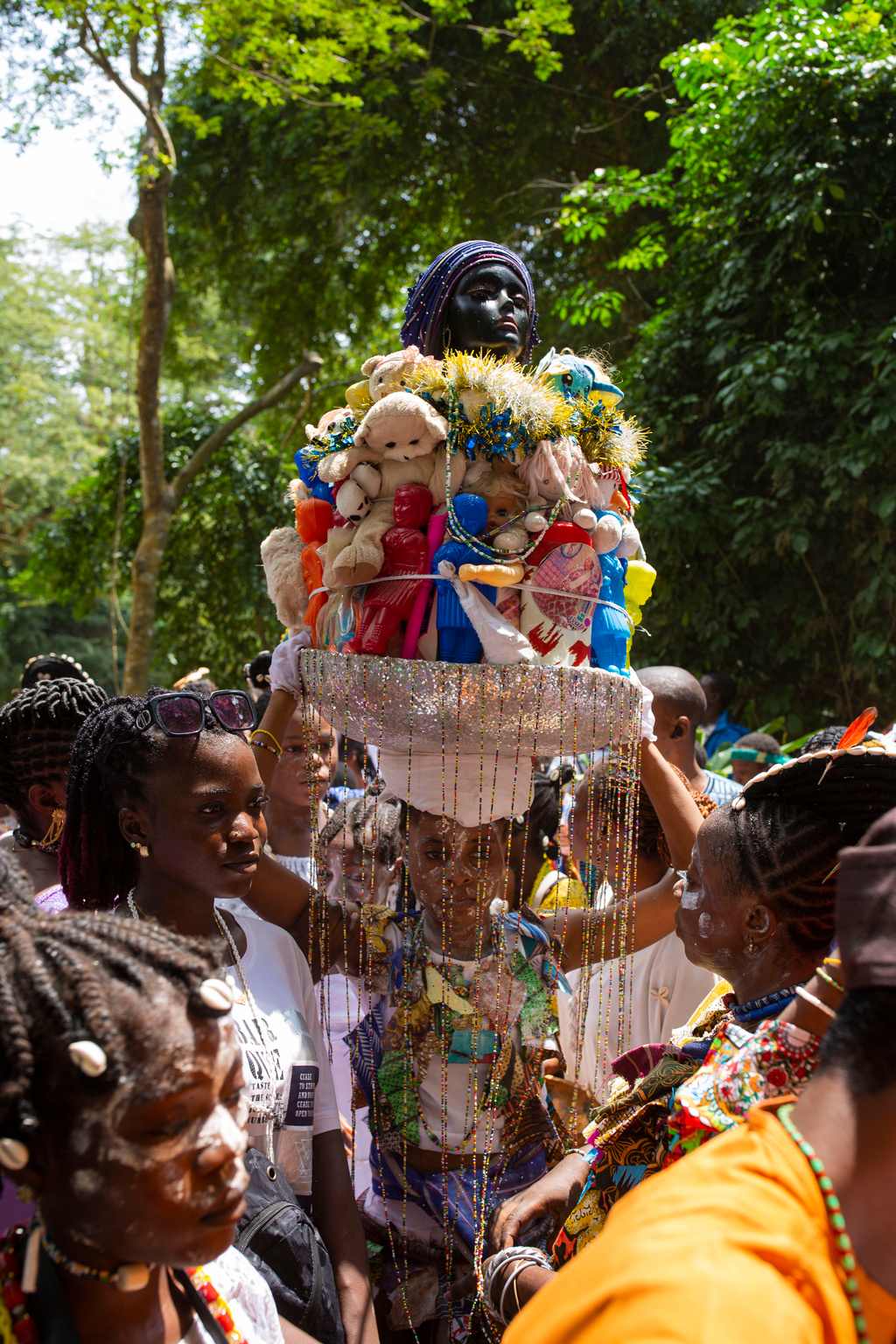
At the absolute center of the grand procession is the Arugba. She is a young, unmarried woman of royal lineage chosen for her purity. Balancing a heavy, sacred covered calabash containing the community’s sacrificial offerings on her head, she walks the entire distance to the river.
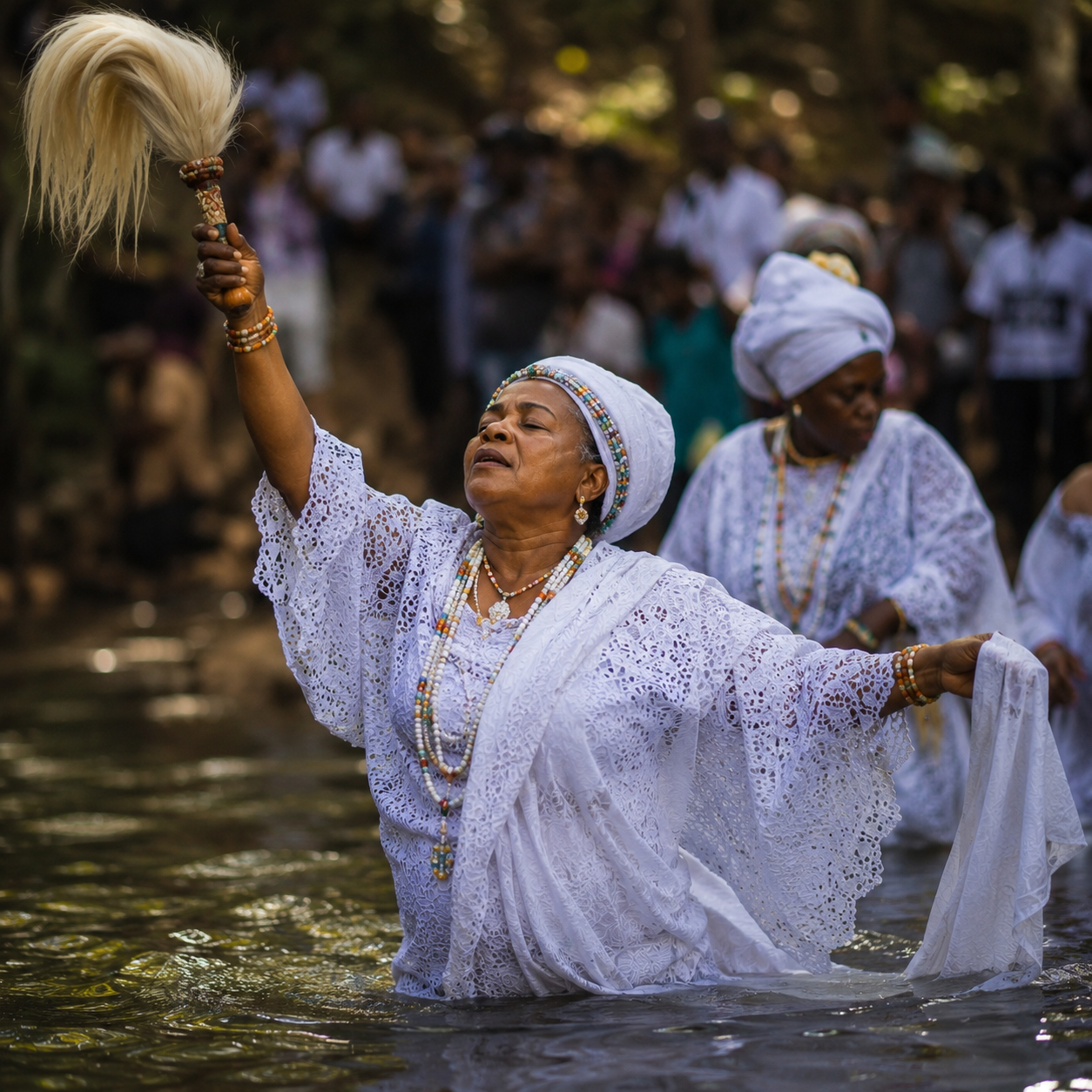
Escorted by senior priestesses and heavily guarded by a protective crowd, her journey symbolically re-enacts the original pact between the hunter Olutimehin and the goddess Osun. Once she arrives at the riverbank, the Ataoja and chief priests perform the final rites to secure fertility, health, and peace for the upcoming year.
A Global Pilgrimage for the Yoruba Diaspora
The Osun-Osogbo Festival holds weight far beyond southwestern Nigeria. It sits alongside other UNESCO-recognized Yoruba heritages, including the Ifá Divination System (inscribed in 2008), the Gelede Oral Heritage (inscribed in 2008), and the Sango Festival (inscribed in 2023).
For millions of descendants in the African diaspora—including practitioners of Candomblé, Santería, and Orisha religions in Brazil, Cuba, and the Caribbean—the Osun River is their spiritual home. Every August, the forest paths are walked not just by locals, but by international scholars, tourists, and spiritual pilgrims returning to their roots.
Practical Guide for 2026 Attendees
Getting There: Osogbo is the capital of Osun State, located approximately 250 km (a 3- to 4-hour drive) north of Lagos.
The Weather: August falls squarely within Nigeria’s rainy season. Temperatures average 24–28°C (75–82°F) with high humidity. Expect heavy downpours and muddy forest pathways—waterproof, high-traction footwear is essential.
Navigating Crowds: The grand finale on the final Friday attracts the largest crowds. To secure a safe, clear vantage point near the river, aim to arrive at the grove very early in the morning.
Tours & Accommodations: Due to the spread of rituals over two weeks, booking a structured group tour with local operators is highly recommended to ensure safe logistics.
Most Recent Posts
- All Posts
- African Culture
- Architectural Design
- Best Builders
- building with purpose
- Client Stories
- Concrete works Nigeria
- Construction
- construction craftsmanship
- Construction Education
- construction Nigeria
- Eco-friendly construction
- Green building Nigeria
- Heritage Travel
- Hot
- House for Rent
- House for sale
- inclusive building design
- Insider
- Land For Sale
- Marketing Plan
- New Buildings
- News
- Petik Projects
- Project Management
- Property
- Property Investment
- quality construction company Nigeria
- Real Estate
- Real Estate Updates
- Structural Engineering
- Structural steel Nigeria
- Sustainable Building
- Sustainable building Nigeria
- Test Category
- Trust & Transparency
- Trusted builders Nigeria


Categories
- African Culture (1)
- Architectural Design (8)
- Best Builders (22)
- building with purpose (12)
- Client Stories (1)
- Concrete works Nigeria (12)
- Construction (20)
- construction craftsmanship (9)
- Construction Education (1)
- construction Nigeria (9)
- Eco-friendly construction (2)
- Green building Nigeria (1)
- Heritage Travel (1)
- Hot (4)
- inclusive building design (1)
- Land For Sale (4)
- New Buildings (4)
- News (1)
- Petik Projects (15)
- Project Management (1)
- Property (1)
- Property Investment (2)
- quality construction company Nigeria (2)
- Real Estate (7)
- Real Estate Updates (7)
- Structural Engineering (1)
- Structural steel Nigeria (3)
- Sustainable Building (1)
- Sustainable building Nigeria (1)
- Trust & Transparency (1)
- Trusted builders Nigeria (3)
Tags
- 30-day build
- A House?
- Acquisition
- African Festivals
- Age Friendly Design
- Arugba Procession
- Bill of Quantities
- building contractor
- building contractor Lagos
- building costs Nigeria
- Building Failures Nigeria
- building speed
- building stages
- buy
- Buy A House?
- Buy House?
- Buyers
- Civil Works
- client testimonial
- construction budget
- construction company
- construction experience
- construction materials
- construction Nigeria
- construction process
- cost of building Nigeria
- Damp Proofing
- Diaspora Real Estate
- diaspora real estate Nigeria
- Drainage Systems
- fast construction
- foundation casting
- Foundation First
- Green Construction
- Home
- home developments in Nigeria.
- Home Inspection
- house building guide
- house building Nigeria
- Inclusive Building
- Investing
- Investing In A Real Estate Property
- Investment Property
- Lagos
- Multi Unit Development
- Nigeria
- Nigeria Construction
- Nigerian Real Estate Investment
- Osun State Tourism
- Osun-Osogbo 2026
- Petik
- Petik Builds
- Petik Limited
- Planning
- Project Management
- Quality Control
- Real Estate
- real estate development Nigeria
- Real Estate Investing
- Real Estate Investment
- Real Estate Nigeria
- Real Estate Property
- Reinforced Concrete
- reliable builders
- Rent
- Should
- Should I Rent
- Should I Rent Or Buy A House?
- Site Mobilization
- Spiritual Tourism
- stress free building
- Structural Engineering
- Structural Integrity
- Susanne Wenger
- Sustainable Architecture
- Tips
- Top Real Estate Companies in Lekki
- Tourism in Nigeria
- transparent construction
- transparent pricing
- UNESCO World Heritage
- Universal Design
- Waterproofing
- Wealth Building
- Yoruba Culture